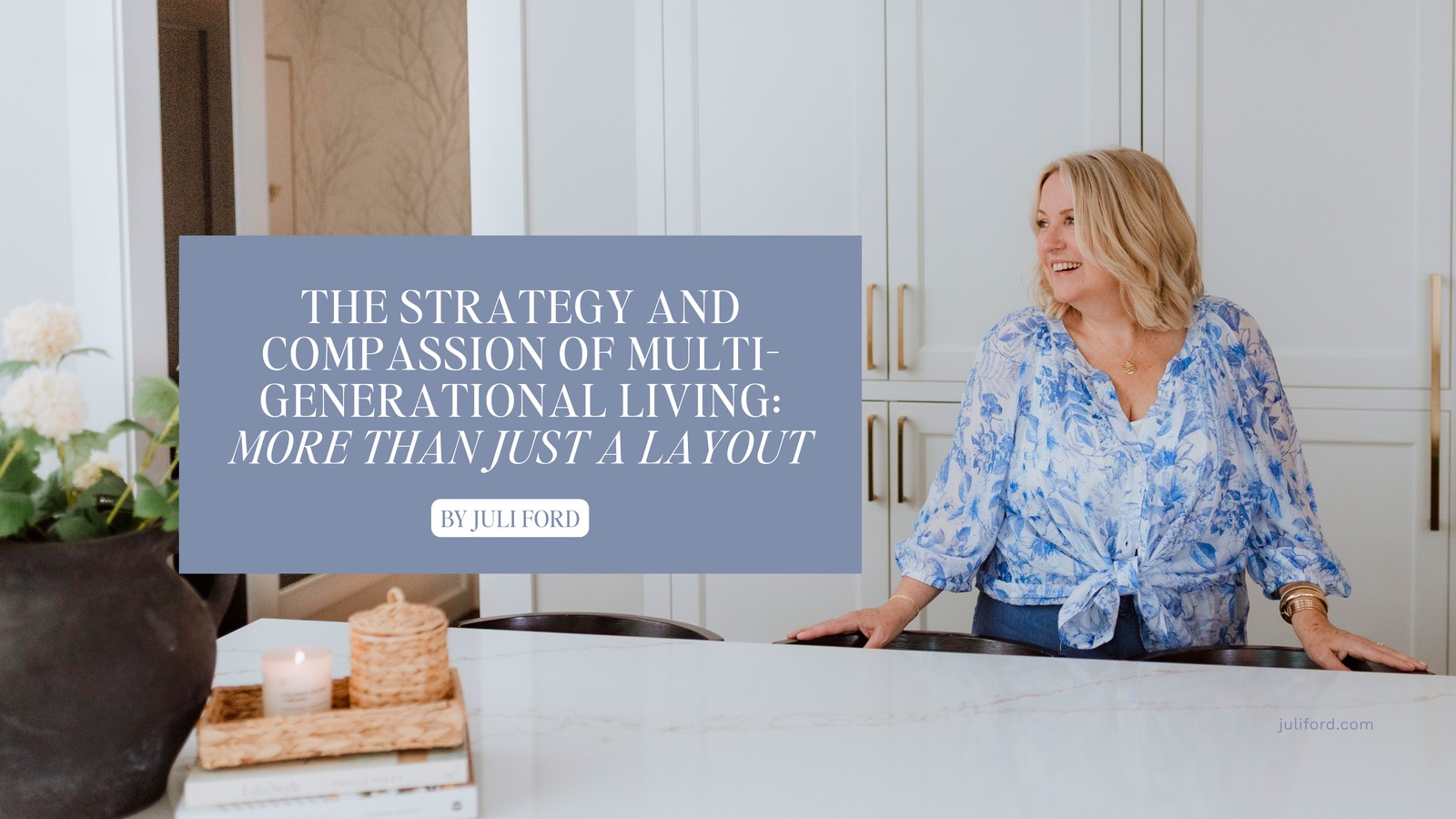
Carrying the Weight of Three Generations
I know exactly what it feels like to carry the weight of three generations at once. You want to do right by your parents while showing up fully for your children. But in the middle of it all, you are also trying to protect your own energy, your own space, and your own peace.
If you’ve ever felt like multi-generational living is a test of selflessness, I’m here to tell you it’s actually about something else: being strategic and compassionate—especially toward yourself. Over the last ten years, my husband, our two kids, my 82-year-old mom, and a rotating cast of pets have built a life together here on the South Shore.
We’ve made mistakes, had breakthroughs, and learned that while the right home layout is crucial, it’s only one part of the equation. Whether you are looking at an in-law apartment in Hingham, a finished lower level in Norwell, a backyard bungalow in Scituate, or a second primary suite in Duxbury, the "bones" of the house must support the soul of the family.
Key Takeaways for Multi-Generational Success
- Strategy over Sacrifice: Successful co-living relies on intentional design and clear boundaries rather than just "making it work."
- Structure Matters: Layouts should prioritize "Privacy by Design" to balance social connection with necessary solitude.
- Communication is Foundation: Transparent discussions regarding finances and caregiving roles prevent long-term friction.
- Future-Proofing: Homes must be adaptable for current needs and the aging-in-place requirements of the next decade.
Beyond the Floor Plan: The Pillars of Co-Living
To make multi-generational living truly work, you need to focus on the elements that go beyond the blueprint. In towns like Hanover, Weymouth, and Braintree, we see a diverse range of housing stock, but the social dynamics remain the same regardless of the zip code.
1. Clear Communication and Boundaires
Establish expectations before you move in together. This includes everything from shared meal times to who manages the landscaping. Setting these benchmarks early prevents the "roommate resentment" that can occur when roles are undefined.
2. Privacy by Design
Multi-generational living doesn't mean being together 24/7. It is essential to create spaces that foster both connection and necessary solitude. This might mean separate entrances, sound-dampened walls, or dedicated kitchenettes that allow parents to maintain their morning routines independently.
3. Honest Financial Conversations
Discuss caregiving, finances, and home maintenance roles openly. Transparency regarding the mortgage, utility splits, or future medical care ensures everyone feels like a stakeholder in the home’s success. Openness is the best antidote to future friction.
4. Future-Proofing for Longevity
Ensure your home works for the season you are in and the one that is coming next. In areas like Quincy and Plymouth, many families are retrofitting homes with Universal Design principles—such as curbless showers and wider doorways—to ensure the home remains functional as mobility needs change.
You don't have to have everything figured out today, but you do deserve a home that holds everyone with more ease. Planning for the future of your family is a journey that requires professional support and personal empathy.
"Your family’s story is beautiful—let’s find the home that helps you tell it."
Whether you are just beginning to explore the idea of an in-law suite in Marshfield or you are ready to find a coastal legacy home that fits three generations, I would love to help you navigate this path with the clarity you deserve.
Explore your family's possibilities: Visit juliford.com/multi-gen for the resources your family needs to plan for what's next, or listen to more stories and guidance on my Home After 50™ podcast at juliford.com/podcast.
Frequently Asked Questions
What is the definition of a multi-generational home?
A multi-generational home is a residential property designed to house two or more adult generations under one roof. These homes typically feature specialized layouts, such as accessory dwelling units (ADUs), dual primary suites, or finished basements, to provide a balance of shared living areas and private quarters.
What are the most popular multi-generational layouts on the South Shore?
On the South Shore of Massachusetts, popular layouts include walk-out lower levels in hilly areas like Norwell, detached "carriage house" suites in historic Cohasset or Hingham, and first-floor bump-out additions. Homeowners often prioritize "Aging in Place" features like no-step entries and main-floor bedrooms to accommodate elderly parents.
Does an in-law suite add value to a Massachusetts home?
Yes, multi-generational features are highly sought after in the current market and can significantly increase a property's resale value and appeal. Because zoning for accessory apartments varies by town (such as specific bylaws in Scituate or Duxbury), homes with pre-permitted or legal "in-law" status often command a premium from buyers looking to consolidate households.
How do you manage privacy in a shared family home?
Privacy is best managed through "Privacy by Design," which involves physical separations like separate thermostats, soundproofing, and distinct outdoor spaces. Beyond the architecture, successful families establish "social contracts" that define private versus common hours to ensure everyone has the solitude they need to recharge.
Ready to take the next step?
Free Multi-Gen Guides & Toolkit: Floor plan guide, family conversation scripts, and financial checklists — all in one place. juliford.com/multi-gen.
Workshops & Events: Join live sessions on multi-generational living, financing options, and family home strategy. juliford.com/events.
Book a Home & Family Strategy Session: Personalized guidance on buying, renovating, or structuring a multi-generational home. juliford.com/consulting.

About the Author
Juli FordFounder of Home After 50 · CSA · Licensed Real Estate Broker
Juli Ford is the founder of Home After 50, a nationally recognized multigenerational living expert, real estate broker, and Certified Senior Advisor® helping women and families reimagine home and life in the next chapter, together.
As featured in The New York Times, Newsweek, Business Insider and Fox & Friends.
Read More Blogs
Related Articles
Home After 50 | Multi-Gen Living
5 Money Talks Every Multigenerational Home Should Have Before the Holidays (Ranked Easiest to Hardest)

Home After 50 | Multi-Gen Living
Will Your Home Equity Pay For In-Home Care? What a New Study Found

Multigenerational Homes